
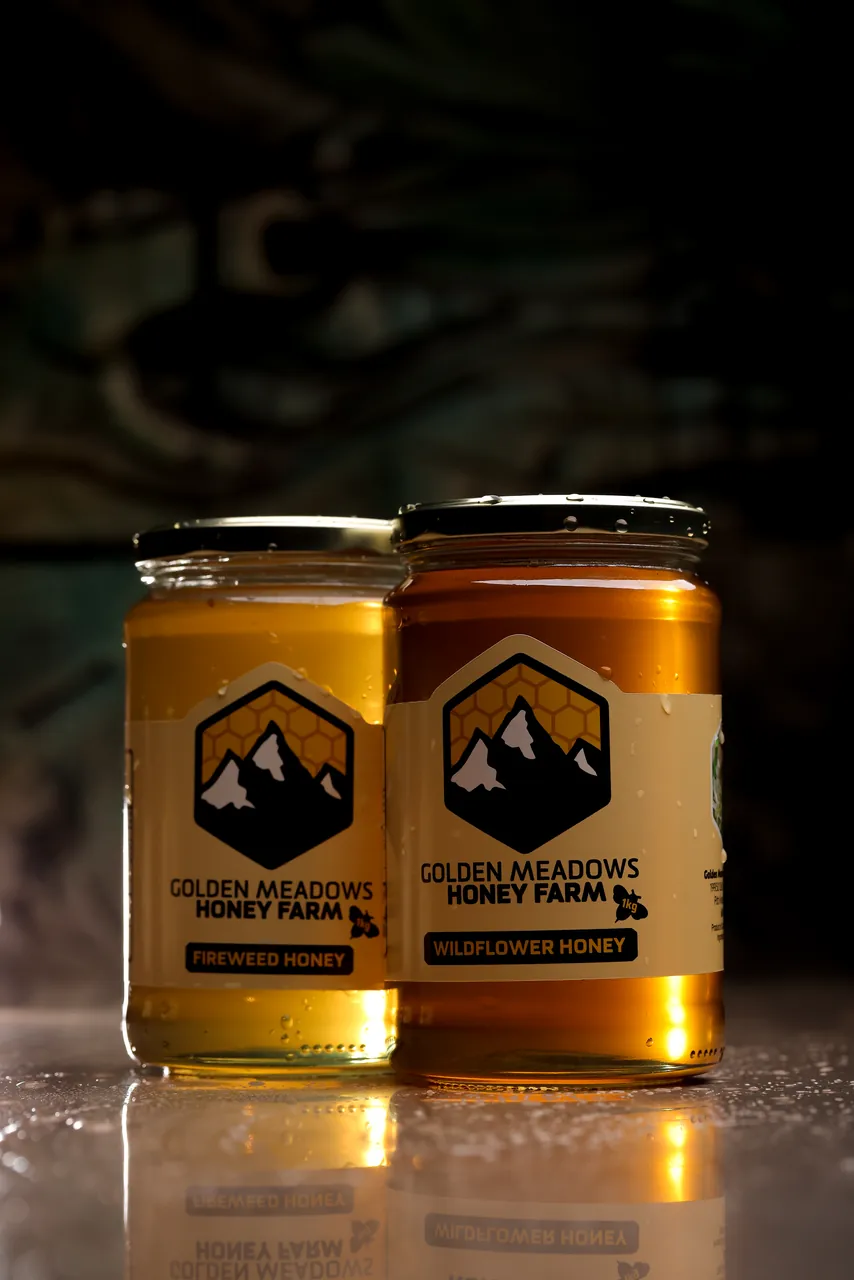
Honey is one of the hardest everyday products to photograph well. It sits in glass, which reflects everything in the room. Its colour, the thing buyers care about most, only shows when light passes through the jar. And the label has to stay sharp and readable while all of that happens. This guide explains how good honey photography is made, which images a honey brand needs, and how to get your jars ready for a shoot.
Why honey needs its own approach
Online, a customer cannot taste, smell or hold your honey. The photo has to do that work. A jar lit from the front tends to look dark and flat, close to brown, even when the honey is a pale gold in real life. Buyers comparing a fireweed honey with a wildflower or buckwheat honey are choosing by colour first, so a photo that hides the colour hides the reason to buy.
Good images also make a small producer look established. On a market table your honey speaks for itself. On a website, a marketplace listing or a retailer's shelf tag, the photography is the first impression.
How honey is lit
- Light from behind. Placing a soft light behind or beneath the jar lets it glow, so the true colour and clarity show. A second, gentler light from the front keeps the label readable.
- Control the reflections. Glass acts like a mirror. Large, soft light sources and black or white cards around the jar shape clean highlights along its edges instead of bright spots and reflections of the room.
- Choose the background for the honey. A dark backdrop makes golden honey look rich and premium. A white or light background suits clean online-store images and pale, creamy honeys.
- Keep the colour accurate. The honey in the photo should match the honey in the jar. Colour should be checked during editing, so a customer who orders an amber honey receives what they saw.
When you sell more than one variety, photograph them side by side at least once. The difference between a pale honey and a dark one is your easiest selling point, and it only shows when the jars share the same light.
The shot list for a honey brand
- Clean product images. Each jar, size and variety on a plain background, at a consistent angle and scale, for your online store and marketplace listings.
- The range together. All varieties or all sizes in one frame, for your homepage, wholesale sheets and retailer pitches.
- Hero images. One or two dramatic, carefully lit photos for your homepage banner, packaging, advertising and print.
- Detail shots. Close views of the label, the lid, the texture of creamed honey or a piece of honeycomb.
- Lifestyle and serving photos. Honey on toast, in tea, on a cheese board or with a dipper, styled with natural props. These work well on social media and in recipes.
- Related products. Beeswax balms, propolis, candles and gift sets, shot in the same style so the whole range looks like one brand.
- Short video loops. A slow pour or a turning jar, a few seconds long, for Reels, ads and product pages.
How to prepare your jars
- Bring your best jars, and spares. Choose jars with straight, unwrinkled labels and bring two or three of each product, so there is always a clean one.
- Check for crystallization. Unless crystallized or creamed honey is the product, bring jars that are clear. Cloudy honey looks dull under studio light.
- Fill to a consistent level. Jars filled to different heights look uneven when they stand together.
- Handle them as little as possible. Fingerprints, dust and sticky drips are very visible on glass. Jars are cleaned again on set, but arriving clean saves time.
- Bring props that belong to your story. Honeycomb, a dipper, local flowers or a piece of your own equipment make the photos yours and no one else's.
- Tell us where the photos will be used. Online stores, marketplaces, print and social media each need different shapes and sizes. Knowing this first means every image is framed for its job.
Check your label before the shoot
Product photos last for years, so photograph the final version of your label. Food labelling in Canada is regulated, and the rules cover what a honey label must show and which claims are allowed. If your label is about to change, or you are unsure it meets the current requirements, confirm that with the Canadian Food Inspection Agency's guidance before the shoot rather than after it.
Where to use the results
- Online store and marketplaces: clean product images for every variety and size, plus one group shot.
- Google Business Profile: product and lifestyle photos help a farm store or market stall look active in local search.
- Social media: lifestyle photos, detail shots and short video loops, posted regularly.
- Wholesale and retail: a consistent set of images makes sell sheets and retailer listings look professional.
- Packaging and print: hero images for boxes, brochures, banners and market signage.
Our honey photography work
For Golden Meadows Honey Farm in Pitt Meadows, BC, we photographed Fireweed and Wildflower honey side by side, so the pale gold of one and the deeper amber of the other were visible at a glance while both labels stayed readable. For BCB Honey Farm, we photographed bear-shaped jars and classic glass jars on a dark reflective surface to show the range from pale cream to dark amber.
Luxin Media photographs honey, food and packaged products for producers in Metro Vancouver and across British Columbia. See both projects on our product photography page, or tell us about your products.